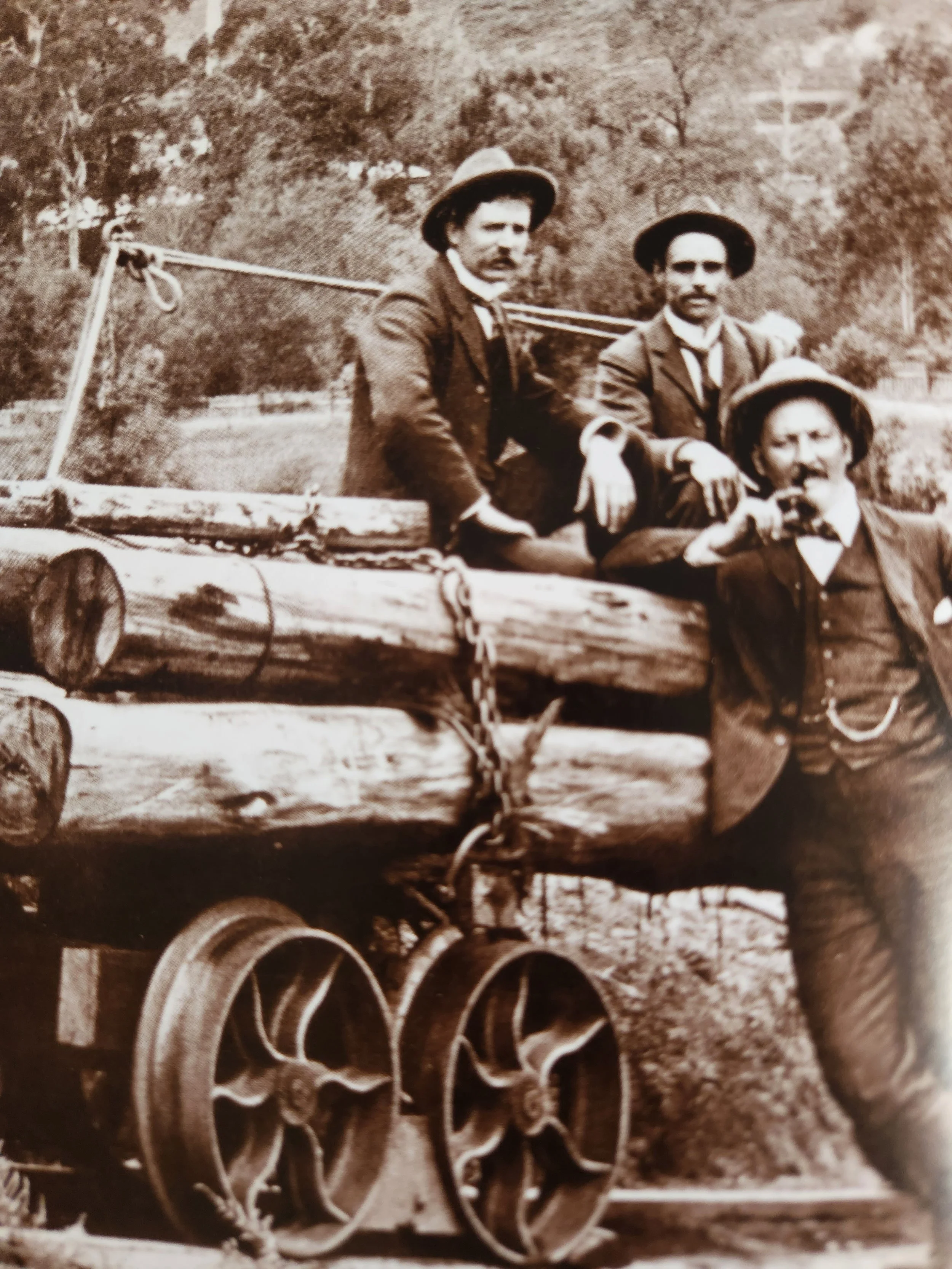
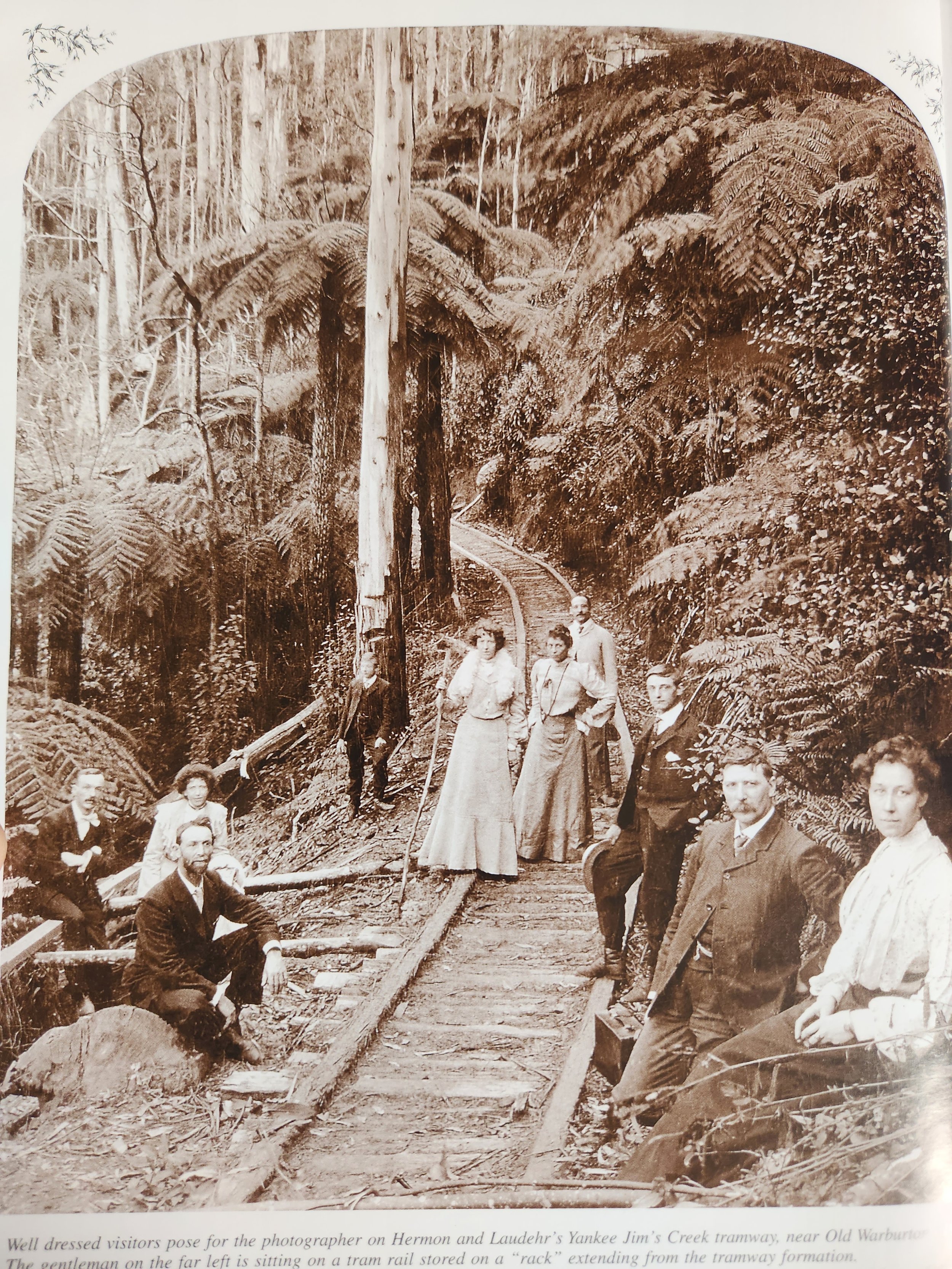
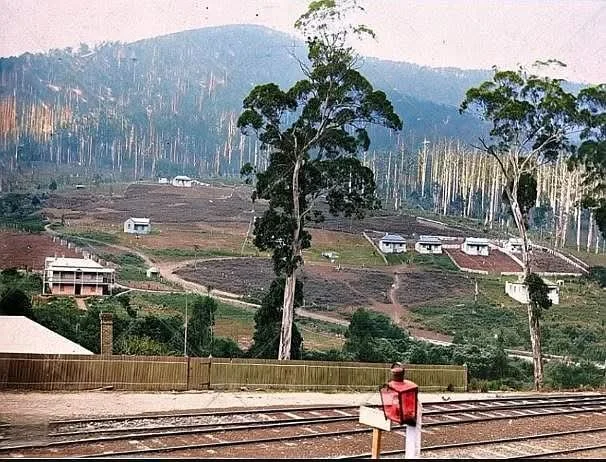
Long before Warburton became a township, the Upper Yarra Valley was cared for by the Wurundjeri Woi-wurrung people. European settlement accelerated after the gold rush of the 1850s, but timber soon became the industry that shaped the town. Following the railway’s arrival in 1901, more than 60 sawmills and an extensive network of timber tramways operated throughout the surrounding forests.
Millhands, sawyers, timber cutters and tramway workers became the backbone of the growing community. Dating from around 1905, Millhands Cottage recalls this formative period and the modest homes occupied by workers and their families.
Although the mills eventually closed, their legacy remains in Warburton’s cottages, rail trail and surrounding forests—tangible reminders of a town built through timber, hard work and community. Further historical detail on Warburton here.